
As March has come to an end, we’re officially a quarter of the way through the year! Throughout these first three months of the year, I’ve read so many wonderful books I’d like to review and recommend. In total, I’ve read 14 books and just over 4000 pages.
Here are some more reading statistics from The Storygraph, an independent, aesthetically-pleasing Goodreads-competitor that I’ve been using to track my reading (connect with me on StoryGraph here!):
- I’ve primarily read books that are “reflective” and “challenging” in mood
- My reads this year are usually slow or medium in pace (an almost 50-50 split!)
- My top genres of the year thus far are classics, literary, and contemporary works
Generally, a majority of the reading I’ve done this year happened in March, as I had a break from school and was able to fill my time reading. My planned TBR has been working very well, as I always know what books to pick up next. That being said, I have deviated a bit from this TBR, reading a few highly anticipated new releases and some books I’ve received for review.
Being more selective with what I read, thanks to my planned TBR, has also been great because I’ve enjoyed the majority of what I’ve read. Of the 14 I read, I have 9 works I’d like to recommend the most highly— some novels, poetry collections, and nonfiction works.
FICTION
- Klara and the Sun by Kazuo Ishiguro
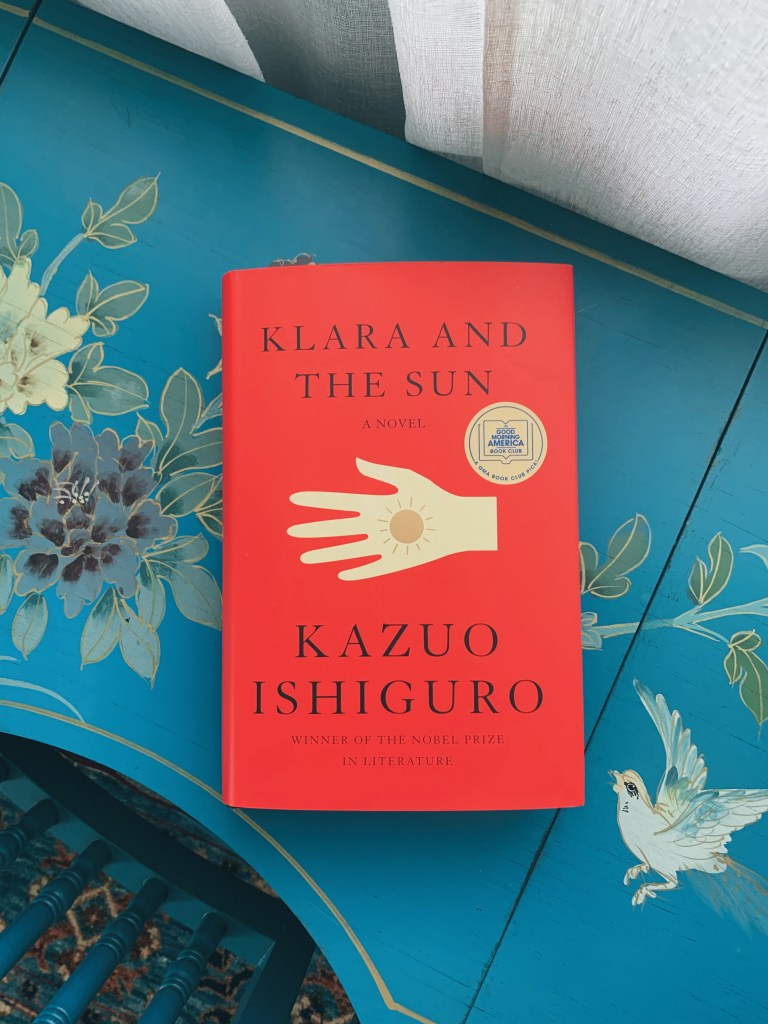
Ishiguro has been one of my favorite writers for a while, so newly released Klara and the Sun was one of my most highly anticipated reads of the year. Klara and the Sun takes place in a world where Artificial Friends (AFs) are purchased by well-off families to be a companion and advocate for young adults. We follow the limited perspective of Klara, an AF herself, as she attempts to fulfill this role and best understand her place in the world. A meditation on class, the function of AI and human labor, and what makes us human, Klara and the Sun has become one of my favorite speculative fiction novels. The inversion of overdone tropes of AI technology and related fear, paired with Ishiguro’s subtle world building and tone, creates an eerie, heartbreaking, and thought provoking story.
I recommend this for anyone who has interest in the role of AI and technology in the world, but isn’t looking for a high/complex sci-fi set up.

2. Vita Nostra by Marina and Sergey Dyachenko
This peculiar, atmospheric, ~dark academia~ novel was an unexpected favorite this quarter, as I don’t usually read fantasy or advanced speculative fiction. Originally written in Russian by Ukrainian co-authors, this novel follows Sasha as her seemingly normal life is disrupted by a mysterious man that gives her strange, embarrassing tasks to complete. As she does them— swimming naked in the ocean, or urinating behind a bush in public— she begins to vomit up gold coins. From there, a whimsical, metaphysical story unfolds in a remote, “magic” school setting, truly unlike anything I’ve read before. This novel is quite long but I flew through it in just one weekend: it is character driven, mysterious, and altogether unique in its tone.
I would recommend this novel for fans of the “dark academia” mood, interested in character and magic driven speculative fiction (this isn’t a very action packed novel), and fans of magic school settings.
**If anyone has read this book and has suggestions for similar reads, please send them my way! I’m so interested in more of this style of writing 🙂
3. Shuggie Bain by Douglas Stuart
The past few years, I have had a lot of luck reading Booker prize winning novels and 2020’s pick, Shuggie Bain, was no exception. This Scottish novel follows Shuggie, the youngest child of Agnes Bain, as he grows up and struggles with his mother’s alcohol addiction, poverty, and his own sexuality. Over the span of a decade, scenes of the Bain family detail the cyclical nature of addiction and how it drives families apart over time. In addition to the rich cast of family members, neighbors, and Agnes’s lovers, the setting of Glasgow is a character itself— a city vividly described in taxi rides and pubs, neighborhoods and grocery stores. A poignant and heart wrenching story about the devastating effects of alcoholism on those who suffer from it and their families, Shuggie Bain is inspired by Stuart’s relationship with his own mother.
I would recommend this novel to anyone looking for a hard-hitting, dark, character driven piece of literary fiction. There is a lot of heavy subject matter and a full list of content warnings can be found here.
4. The Story of My Teeth by Valeria Luiselli
The Story of My Teeth is a slim novel that, on a basic level, follows a charismatic and complicated character with the nickname “Highway.” Set near Mexico City, we learn about Highway as he ascends from security guard at a juice factory to a notorious collector and auctioneer with a specific fixation on teeth— fixing his own teeth, collecting the teeth of famous people, and auctioning teeth. But this metafictional work is much more than that— it becomes a study in form, character, and narrative. It mediates on the purpose of art, of story, and of collection. The Story of My Teeth is a joy to read and learn from as it breaks conventions and expectations.
I would recommend this novel to those interested in experimental fiction and the role of story, but also looking for some humor and charisma in their work!
5. The White Boy Shuffle by Paul Beatty
I’ve been meaning to read Paul Beatty’s work for a while— he’s the first American to ever win the Booker Prize, which, as I mentioned above, is one of the only prizes I consistently enjoy the work from. I started with Beatty’s debut novel, a satirical coming of age tale that follows Gunnar Kaufman as he grows up and becomes a poet, basketball player, and cultural icon. It’s a humorous book rich with biting commentary on race, politics, and gender. The voice of the novel is so unique and strong, and the characters are exciting to read about. Unfortunately I didn’t love the last ~¼ of the book as much as I did the beginning, but overall I do think this is worth the read! I’m excited to pick up more of Beatty’s work in the future.
I recommend The White Boy Shuffle to those interested in satire, in discussions of class and race in America through a larger-than-life character, and general fans of American literary fiction.
POETRY
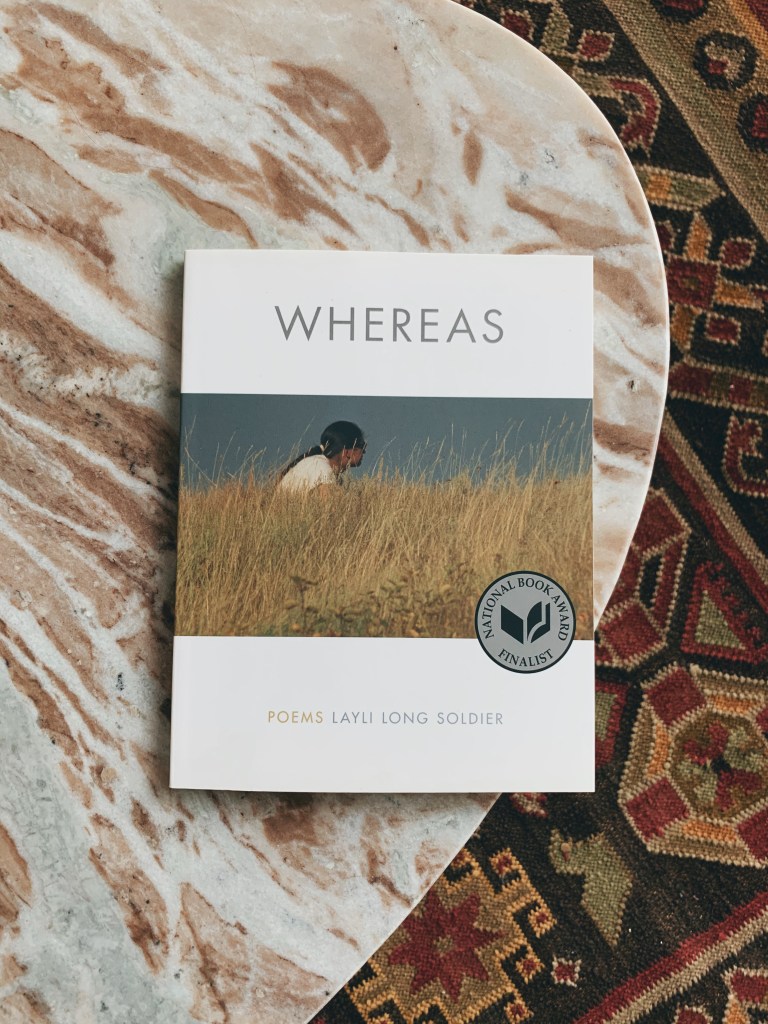
- WHEREAS by Layli Long Soldier
Layli Long Soldier is an Oglala Lakota poet whose work I’ve been reading and admiring for years. I finally read the entirety of the collection WHEREAS this January and it was breathtaking. WHEREAS was written in response to the congressional apology to Indigenous Americans signed in 2009, and also speaks to Long Soldier’s experiences as a mother, daughter, and poet. This collection uses form and language in such unique ways— the poem 38 uses the sentences in an astonishing and heartbreaking way to share truths about the Dakota 38; Long Soldier uses and deconstructs the language of the congressional apology in a variety of ways to illustrate how its words are weaponized against Indigenous people.
I would recommend this poetry collection for readers interested in contemporary poetry that bends and subverts form and language, and those looking for an important perspective on the Congressional “apology” in 2009 and other such legislation.
- Duino Elegies by Rainer Maria Rilke

One of my unexpected joys this year was Duino Elegies, a collection of 10 elegies I picked up on a whim at the used book store. Published in 1923, Duino Elegies is one of Rilke’s greatest masterpieces— the elegies (defined as a poem of serious reflection, usually a lament for the dead on Wikipedia) are beautifully whimsical, full of angels and lovers, images of natures and children. They meditate on death but in ways that feel optimistic and, at times, joyful. The copy I found (for $1.50!) had the original German side by side with the English translation. Though I don’t know German at all, I always like to have the original language for reference when it comes to poetry.
I would recommend these elegies for all my fans of late 19th/early 20th century poetry— lots of classic imagery to dissect and language that absolutely sings!
NONFICTION
- Disability Visibility, edited by Alice Wong

Disability Visibility is an anthology of essays, speeches, poems, and other first-person works on the disabled experience. The blurb states of the collection: “It celebrates and documents disability culture in the now. It looks to the future and past with hope and love.” This book is full of insight and vulnerability, with a fantastic range of contributors. I would recommend this book to anyone, as it provides great perspectives on a variety of different experiences that are often silenced in media. This collection also introduced me to many new writers I’m excited to continue reading from!
Content warnings are included at the beginning of each piece in the collection.
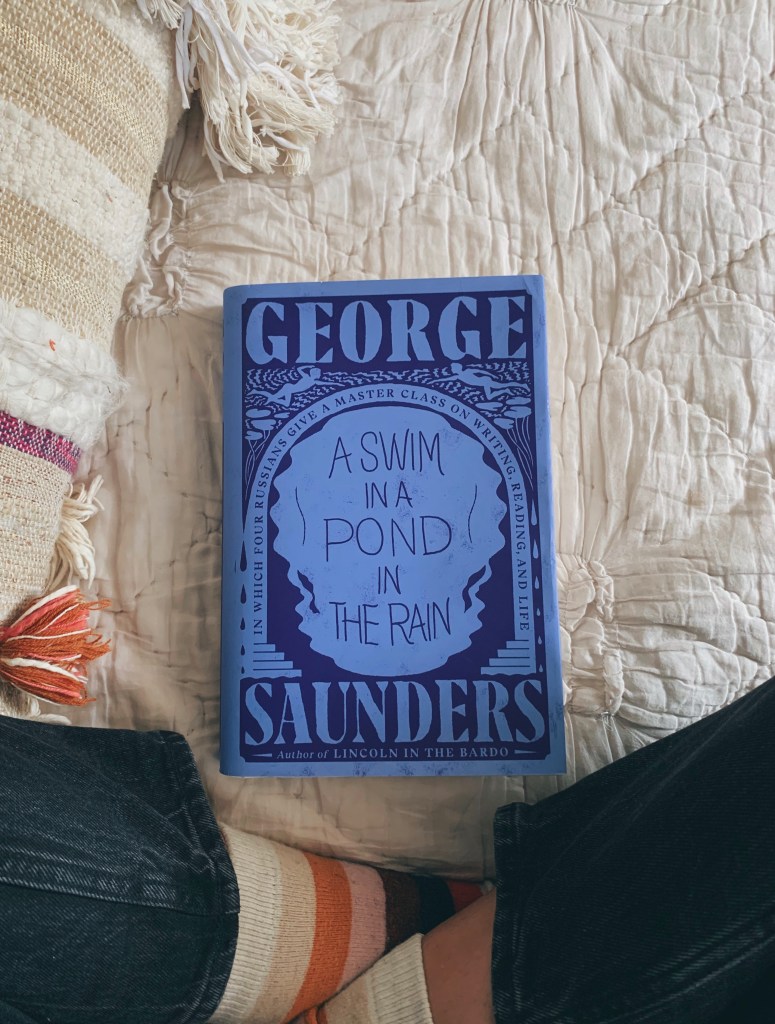
- A Swim in a Pond in the Rain by George Saunders
A Swim in a Pond in the Rain is my new favorite book on writing. George Saunders is one of my favorite authors— I’ve enjoyed his short story collections and love his novel “Lincoln in the Bardo.” I also love Russian classics. So, when I heard Saunders put out a book on writing, where he studies and teaches from short stories by Tolstoy, Gogol, Turgenev, and Chekhov, I could not wait to buy a copy. And this book didn’t disappoint; as we study the 7 featured short stories, Saunders provides rich insight on writing, editing, and life broadly. He is not overly didactic, but instead self aware and reassuring as offers his perspectives (and leaves room for a reader to disagree or contradict).
I would recommend this book to writers, as it provides great perspective on crafting interesting stories. Even if you’re not a writer, this book studies amazing short stories that anyone can learn from 🙂
Thanks for reading!! 🙂

 zoreads
Great recap of your top 2021 books so far! You were able to read so fast and so many!
LikeLike