
I love poetry. Though my blog and instagram typically feature novels, one of my missions is to share my love for poetry and break down preconceived notions of who poetry is for. So, for this post, I wanted to provide some contemporary poetry recommendations to provide entry points for new readers of poetry.
For a while, I was nervous to admit that I read poetry because I felt as though I wasn’t really reading it because I wasn’t really understanding it the way it seemed others did. Through studying poetry in an academic setting, I’ve learned that this feeling is shared by many, and isn’t true. Anybody can read poetry and anybody can have their own experience emotionally connecting or finding meaning with a poem. Certainly, some meanings are more supported and correct (this is to say a poem can’t mean anything you want it to mean), but the goal of reading poetry isn’t to constantly find the ‘right’ reading or to solve the poem.

I will likely make a post more specifically about “how to approach poetry” with resources on reading poetry at a later time, but I wanted to briefly explain how I approach and read poetry to help those who are new to poetry.
As mentioned before, you don’t have to completely understand every piece of a poem to enjoy it, connect with it, or have a meaningful reading experience. When I read poems, I read them multiple times. I listen for sounds and phrases that are interesting to me sonically and lines that connect with or speak to me. Poetry is a sonic experience, so I would definitely recommend reading pieces aloud or reading in your head at a slower pace. I look for repeated images and words, I try to deconstruct and understand images or words that are puzzling or interesting to me, and I try to find meaning in the sounds of the poem.
Ultimately, my goal is not to understand every piece of the poem, but to think deeply about what it makes me feel, the passages that interest me, the sounds that interest me, and how the piece interacts or builds upon itself. Not every poem is interesting to me, of course, so I just read some once and move on. The experience of finding meaning and connection to a poem should be enjoyable, rewarding, or reflective, and if a poem isn’t providing that, I would suggest trying a different one.
Here are some contemporary poetry collections I’ve connected with, and some links to poems that are in these collections. They’re all quite celebrated collections, but I figured they would be good entry points to contemporary poetry for that very reason. I hope you find something that you can connect with and that speaks to you!
Deaf Republic — Ilya Kaminsky

This poetry collection has been exceptionally popular this year and is a finalist for the National Book Award in poetry. The poems in this collection describe a family during the occupation of a city during political unrest. Upon a gunshot, the entire city goes deaf (Kaminsky himself is hard-of-hearing). This collection is beautifully crafted and incorporates sign language into the narrative.
This collection follows a narrative and set of characters throughout. If reading poems that feel very different and unconnected is jarring for you, this is a great one to start with.
Read a sample from this collection on the New Yorker website.
Boy With Thorn — Rickey Laurentiis

This collection of poems is deeply moving, featuring poems that integrate history, oppressive legacies, and personal intimacies and understandings of the body. I find this review in the Indiana Review accurate and helpful in understanding how it uses the themes.
These poems all use sound and language really beautifully without being too inaccessible in their meaning, so if you’re interested in sound, I’d start here. My favorite poems from the collection are ‘I Saw I Dreamt Two Men’ (linked below) and ‘Conditions for a Southern Gothic’.
Read ‘I Saw I Dreamt Two Men‘ and ‘Writing an Elegy.’
Something Bright, Then Holes — Maggie Nelson
This collection of poems explores aimlessness, loss, and resilience in accessible and un-pretentious language. Many of the poems at the beginning of this collection are set in nature and many in the middle are set in a hospital where Nelson describes her relationship with a friend who has suffered an accident. My favorites in this collection are ‘A Mute Story of November’ and ‘Saturday Morning’.
Read four poems from this collection in Bomb Magazine.
Bluets — Maggie Nelson

Maggie Nelson is one of my favorite poets, so I included her twice. While the collection listed above is what is more normatively expected of poetry (i.e. in verse), I also wanted to recommend Bluets, which is a prose poem and/or lyric essay. Bluets details Nelson’s love and devotion to the color blue– it explores grief, womanhood, love, and struggle in many intimate and meaningful ways. For those more comfortable with prose and essay, this is a great place to start because it has a lot of elements of poetry but the reading experience is more familiar.
Listen to a discussion of Bluets on the Poetry Foundation website.
WHEREAS — Layli Long Soldier
This contemporary poetry collection is one of the most impactful books I’ve read (and listened to, see the video below!) in a long time. Layli Long Soldier responds to a history of statements and forced treaties upon Native American tribes in the United States through an assertion of herself, her presence, and her history. These poems take many different forms, but they are impactful to even new readers of poetry because of their subject matter, their sound, and their feeling.
Read excerpts from WHEREAS or listen to Long Soldier read her incredible poem 38.
Night Sky with Exit Wounds — Ocean Vuong
Ocean Vuong’s new novel, On Earth We’re Briefly Gorgeous, has been exceptionally popular and well received this year. I decided to include Vuong’s poetry collection on this list because (1) if you liked his very-poetic novel, you will probably enjoy his poetry; (2) if you’re interested in themes of immigration, the history of Vietnam, and the experience of understanding the self in relation to history, you will probably enjoy this collection; and (3) his poetry is amazing and powerful. I would highly recommend reading this review of his work from the Kenyon review to get a taste of his work but also to have an introduction to the themes he explores in his collection:
Read a review of his work here.
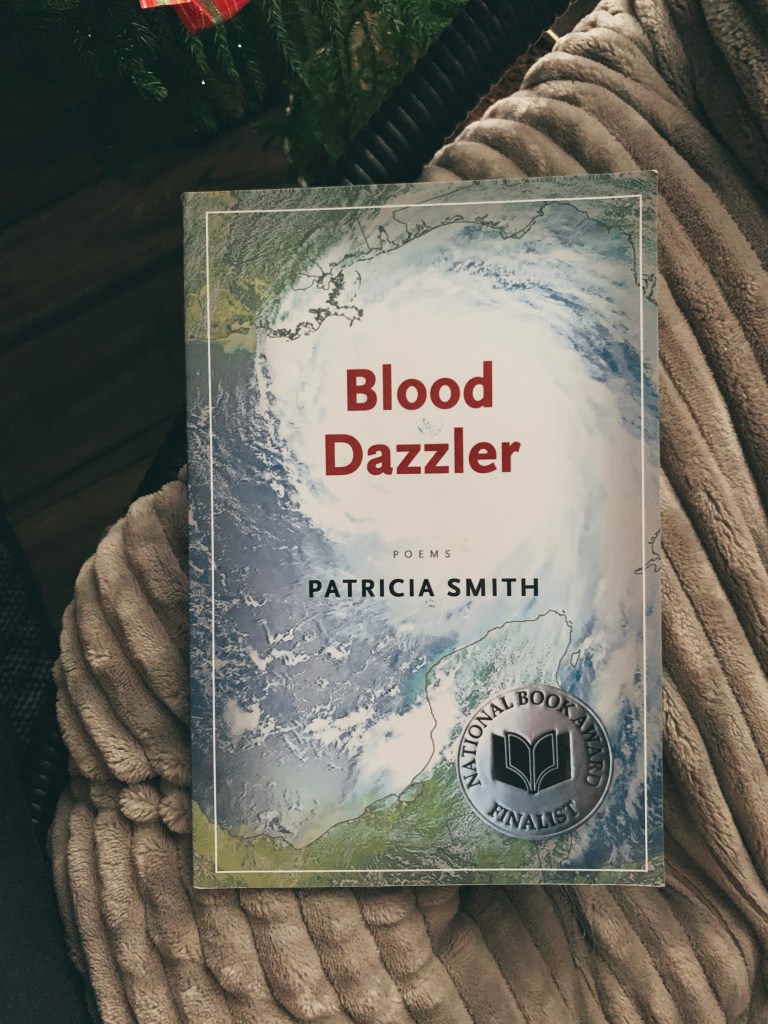
Blood Dazzler — Patricia Smith
Blood Dazzler is a collection that follows Hurricane Katrina and the devastation caused in New Orleans and beyond. It writes to themes of ownership, devastation, healing. Smith is an incredible poet, and if you are looking for a collection that focuses on a single event, I highly recommend this one.
Read poems from the collection on the NPR website.
Citizen — Claudia Rankine [or anything by Claudia Rankine]

I simply could not write about contemporary poetry without mentioning Claudia Rankine. Rankine is one of the most powerful voices and thinkers of our time. Her work can be experimental (for example, her collection Plot), but is a must-read for everyone, even if you aren’t familiar with poetry. The subtitle to Citizen is “An American Lyric.” This collection examines race and the everyday, terrifying experiences of living in this racialized society. It is beautiful, insightful, and devastating. Citizen is also a hybrid of prose poetry, so the form may be more familiar to new readers.


 zoreads
I really enjoyed reading your recommended poems.
LikeLike
Thank you for these recommendations! I never know when to start. Will definitely read Citizen once I get the time, I’ve heard so much about it!
LikeLike
Yes! Definitely read Citizen 🙂
LikeLike