
As September begins, my final summer vacation as a college student comes to a close. While I’m excited for the start of a new semester and the vibrant colors of my favorite season, I’m lamenting the reduction of free time I’ll have in the new school year.
Like many students, summer is a time for me to read whatever I want, while during the school year my reading is often dictated by my course work. So, when I finished exams in early May, I was eager to jump right into the large stack of books I had accumulated during the year.
In total, I read 13 novels in addition to a number of short stories, poems, and essays this summer. While I usually opt to read classics in the summer, I read a lot of contemporary pieces this year, including a number of 2018 and 2019 releases. Overall, I enjoyed nearly everything I read and found new favorites I will carry with me moving forward.
Here is a wrap up of my summer reading:
Novels (in Chronological Order)
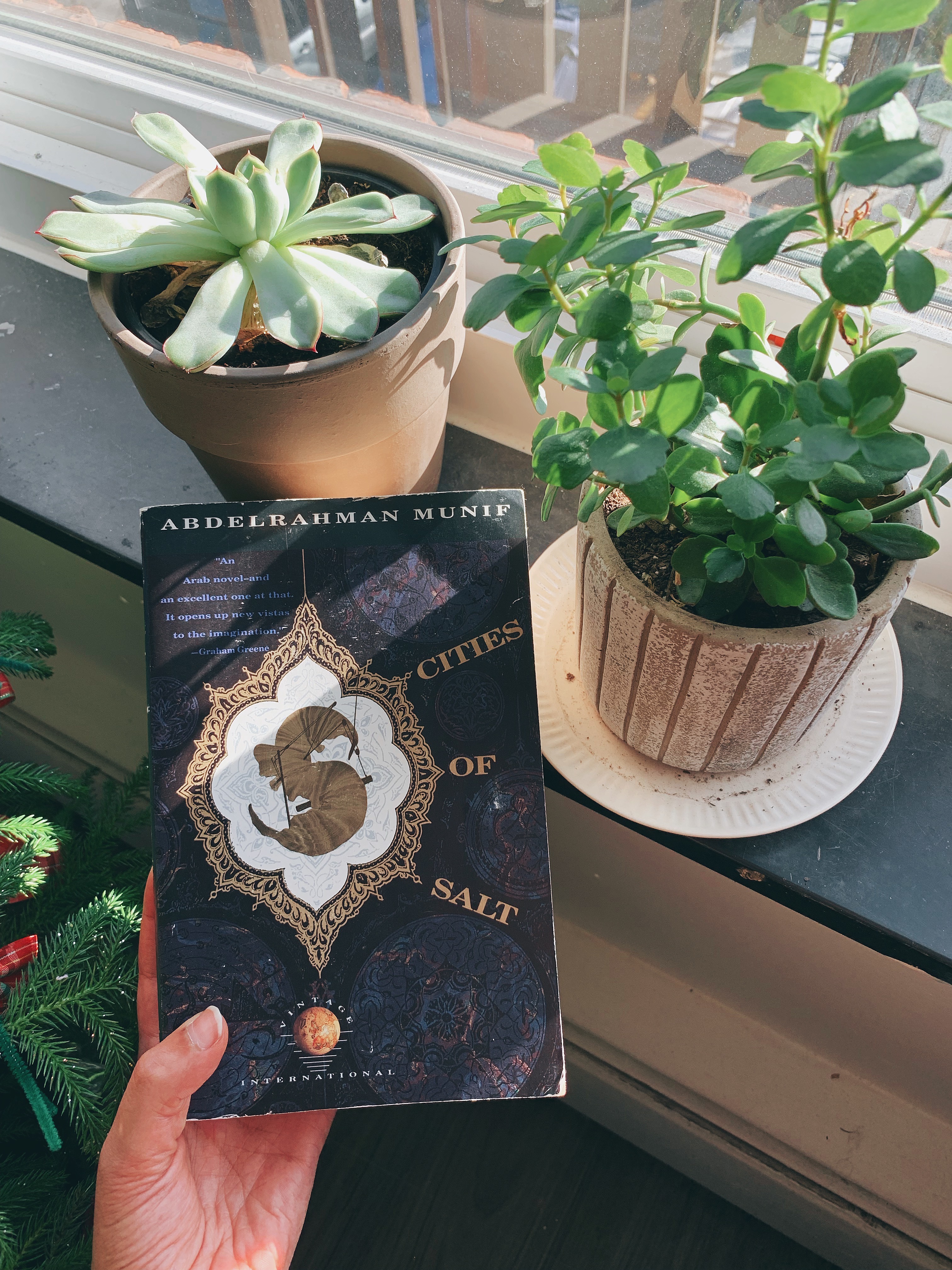
Cities of Salt by Abdul Rahman Munif
This one might not exactly count as a “summer read,” as I started in during the school year and only read the ending during the summer break. This novel was assigned for my course “Race and Economy in Global Literature,” and while I was greatly enjoying the novel and the discussions my class was having about it, I wasn’t able to finish the 600+ page book on time. I tabled it to read other course books and, as soon as summer began, picked it up to finish.
Written in 1984, Cities of Salt describes the effects of petromodernity on communities living in deserts in the Middle East. While these communities had been left largely isolated for centuries, they are stormed and invaded by Americans when oil is found underneath them. The novel follows communities rather than specific characters— the cast is often changing and there is no single protagonist— and spans decades. For this reason, it shows the pervasiveness of the occupation by Americans, awakening the audience to the consistent pains these communities have faced rather than exemplifying singular tragedies or stories of violence.
This book is not one that I would’ve picked up unless I had been assigned, but it is one that I’m glad I read. It’s a tough read, but is certainly a book that haunts you— periodically through the last few months I’ve thought back to the slow prose and moments of peril, comparing them to the communities I read about in current news and politics. If you like long books that aren’t “plot driven,” or if you are interested in broader issues of economy and occupation, I recommend Cities of Salt.
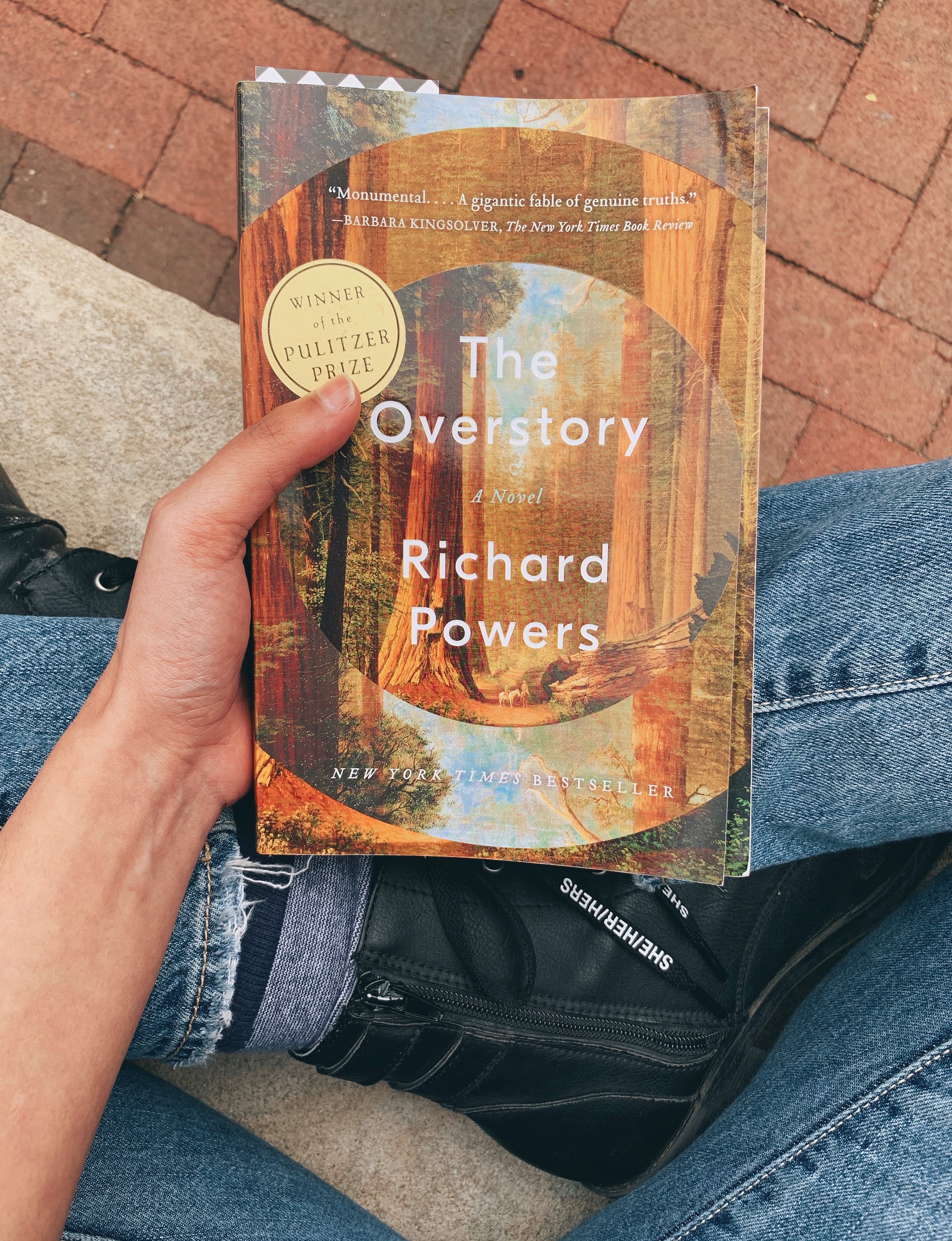
The Overstory by Richard Powers
I picked up The Overstory knowing I would love it. A work of eco-fiction, The Overstory weaves the narratives of a large cast characters together to show how our environment, specifically trees, affects our lives and unites us. The Overstory is one of the best executed versions of this narrative structure I’ve read— one that introduces separate character arcs then unites them— because of the deeper grounding of the story in trees and a communal instinct to care for them. The characters are each so uniquely rich and are able to carry their own identities in a much wider plot.
This novel feels very much like a novel of the moment— about the hopelessness climate activists can feel— but it also carries an awareness of the biological and cultural history of nature and human interactions with it. Overall, I was struck by Powers’ beautiful and poignant writing throughout the novel, and the sense of urgency he conveys regarding the climate crisis without being overly didactic or losing the narrative. I highly recommend this novel to those interested in science, the climate, activism, and long novels with large casts of characters.

If Beale Street Could Talk by James Baldwin
Going into the summer, I decided I had to finally read a James Baldwin novel. After reading his essays, I knew how great of a writer and thinker he was, and was eager to see his philosophies applied in fiction. If Beale Street Could Talk was the first novel of his I picked up, and it certainly won’t be my last!
The story follows Tish and Fonny, two young people in love, as they face the trials of Fonny’s wrongful incarceration and Tish’s pregnancy simultaneously. It describes the sacrifices and love a family must give, as well as provides insight into the way the justice system damages innocent black families. The novel is written with Baldwin’s eloquent and poignant style. As it tells an important story in a gracefully accessible way, I highly recommend this novel to anyone.
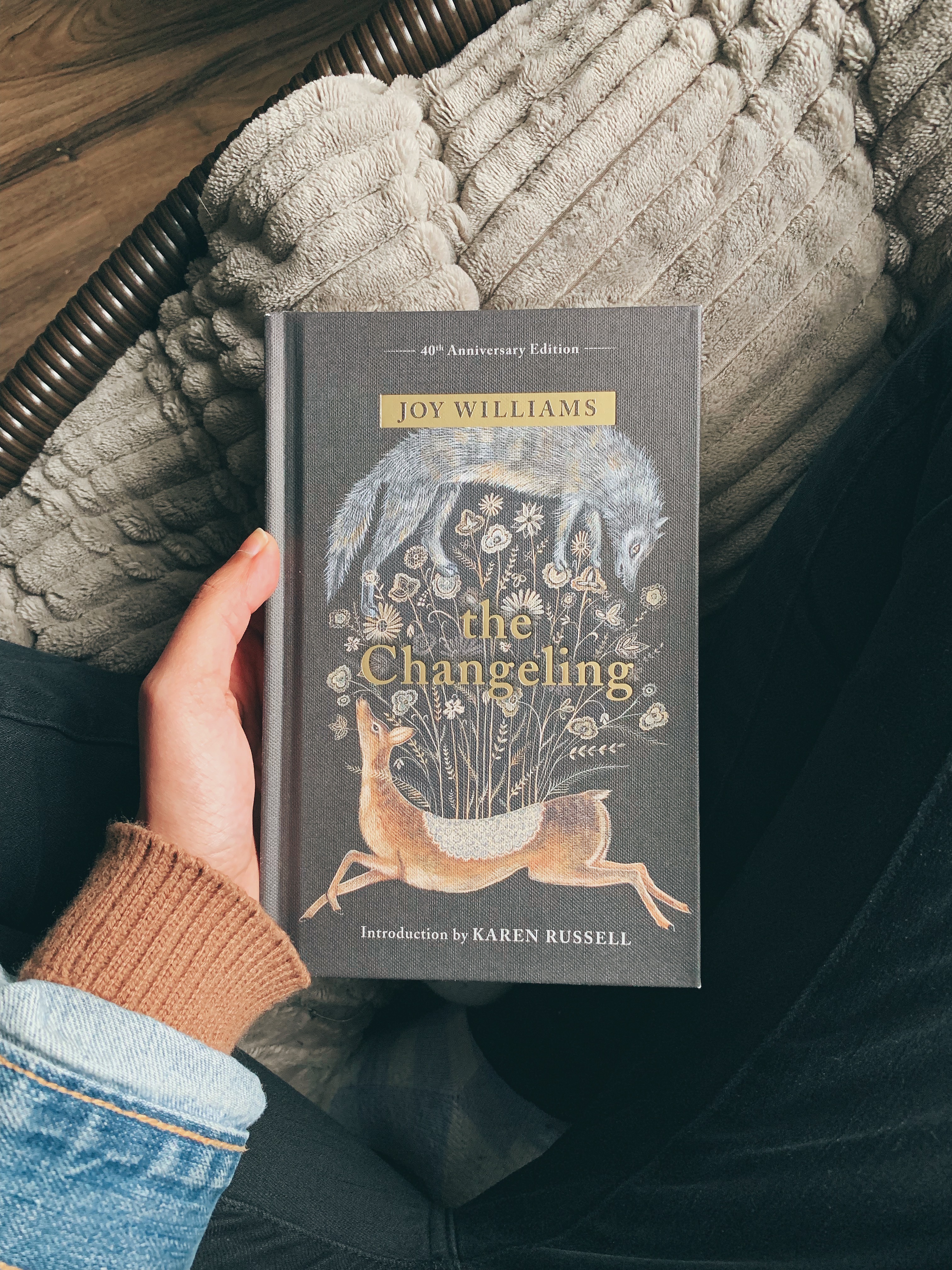
The Changeling by Joy Williams
The Changeling was recommended by one of best friends, who has an eclectic and engaging taste in books, but I had been waiting until I found this beautiful 40th edition copy to purchase it. This novel is one of the most transportive, atmospheric books I’ve read— it is a dark, fairytale-esque story about a woman named Pearl and the island she lives on with her husband’s family and all of the family’s adopted children. In response to a series of traumatic events, Pearl descends into alcoholism and is left watching over many bizarre, intelligent, and haunting children.
Though the plot is fragmented and unexpected, this novel examines the feelings of isolation from the self and from a maternal role quite coherently. These themes are fascinating to me, so combined with the fairytale elements and sharp writing, this novel is certainly a new favorite.
However, if you tend to dislike novels that don’t have a linear plot, I would not pick this one up. While the book does start somewhere and end somewhere else, it tends to move in circles and explore themes and form. This is of course intentional and supplementary to Pearl’s character, but it can be frustrating for some readers.
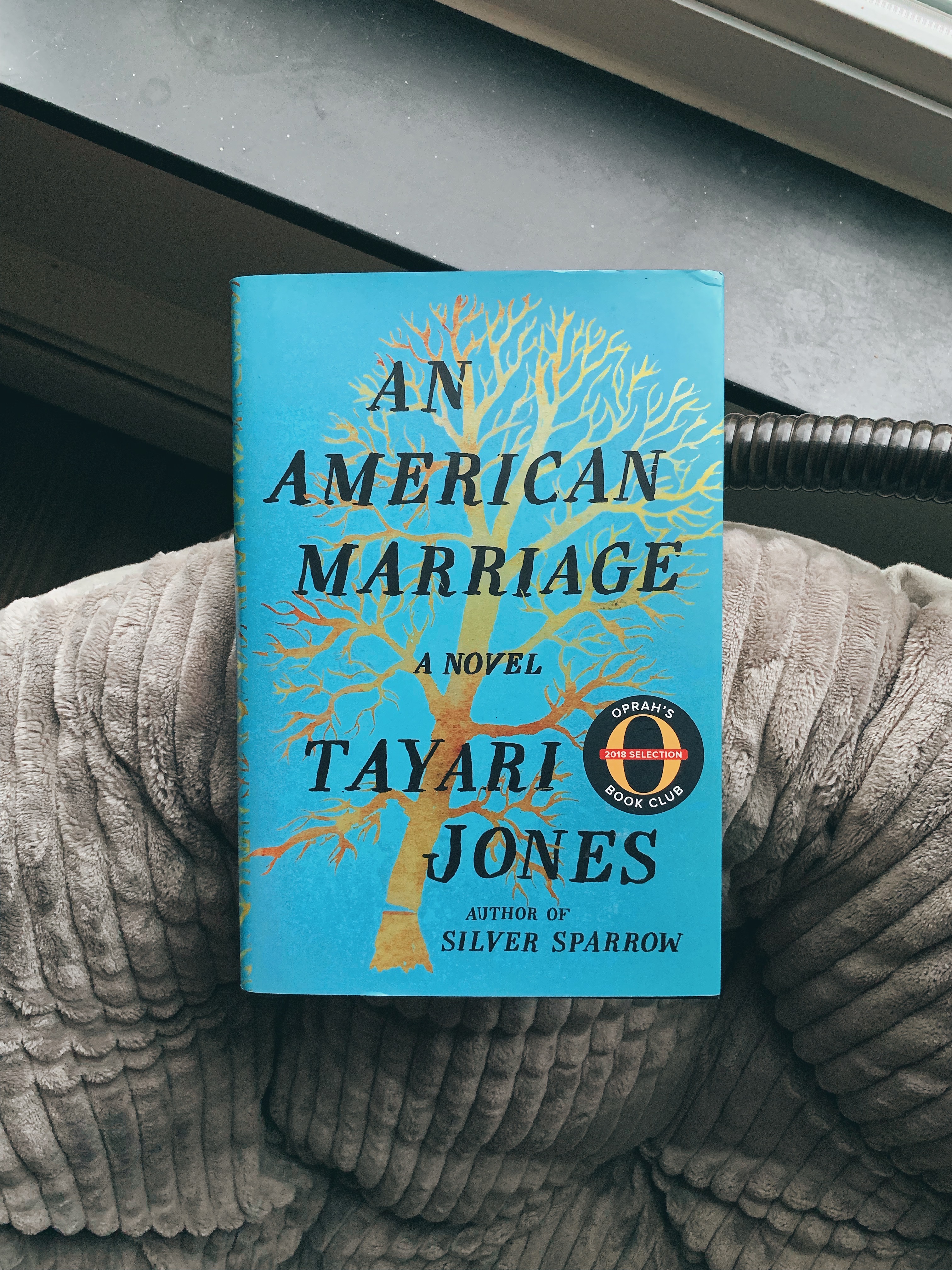
An American Marriage by Tayari Jones
An American Marriage tells the story of Celeste and Roy, who’s marriage of just one year is split apart when Roy is falsely accused of rape. Like If Beale Street Could Talk, this novel tells the story of the systemic failures of the American justice system. While the premise is engaging and this novel was well received, I was ultimately disappointed by it.
The beginning of the novel was wonderful— the letters between Celeste and Roy tell the story beautifully and with subtlety. Additionally, the characters of the parents in the novel were all compelling to me. Frequently, parent side characters rely on tropes, but in this novel they were each given unique personalities and perspectives.
By the end of the novel, I felt that the plot became indulgent in sentimentality and expected the reader to care about characters that felt quite flat (the character of Andre felt like such a caricature!). The symbol of the tree was very on the nose, and I felt like the subtlety and realism at the beginning of the novel was lost. Overall, I finished this book wishing the writing and storytelling had done the story justice, as it is a beautiful and alarming one.
Afterglow: A Dog Memoir by Eileen Myles
I read this book for a writer’s colony I attended, where we studied the memoir for two days then had an opportunity to hear Myles read from it and answer questions. For that reason, a lot of my opinions on these books are heavily influenced by the discussions we had in those sessions–– especially from hearing Myles read.
This unconventional memoir by Myles details their life after the death of their dog, Rosie. This tender topic translates into an emotional read that doesn’t reach sentimentality simply through its strangeness. This book is comprised of many different parts, and some were more successful to me than others. I enjoyed sections that came from the perspective of Rosie, but often times felt lost, uninterested, and confused by other pieces. All in all, I left this memoir uncertain, but upon hearing Myles read and answer questions about the novel I found increased clarity.
I would recommend other work by Myles over this one, like Chelsea Girls, for first time Myles readers. However, if you are a fan of their work, Afterglow has a lot to dig in to.
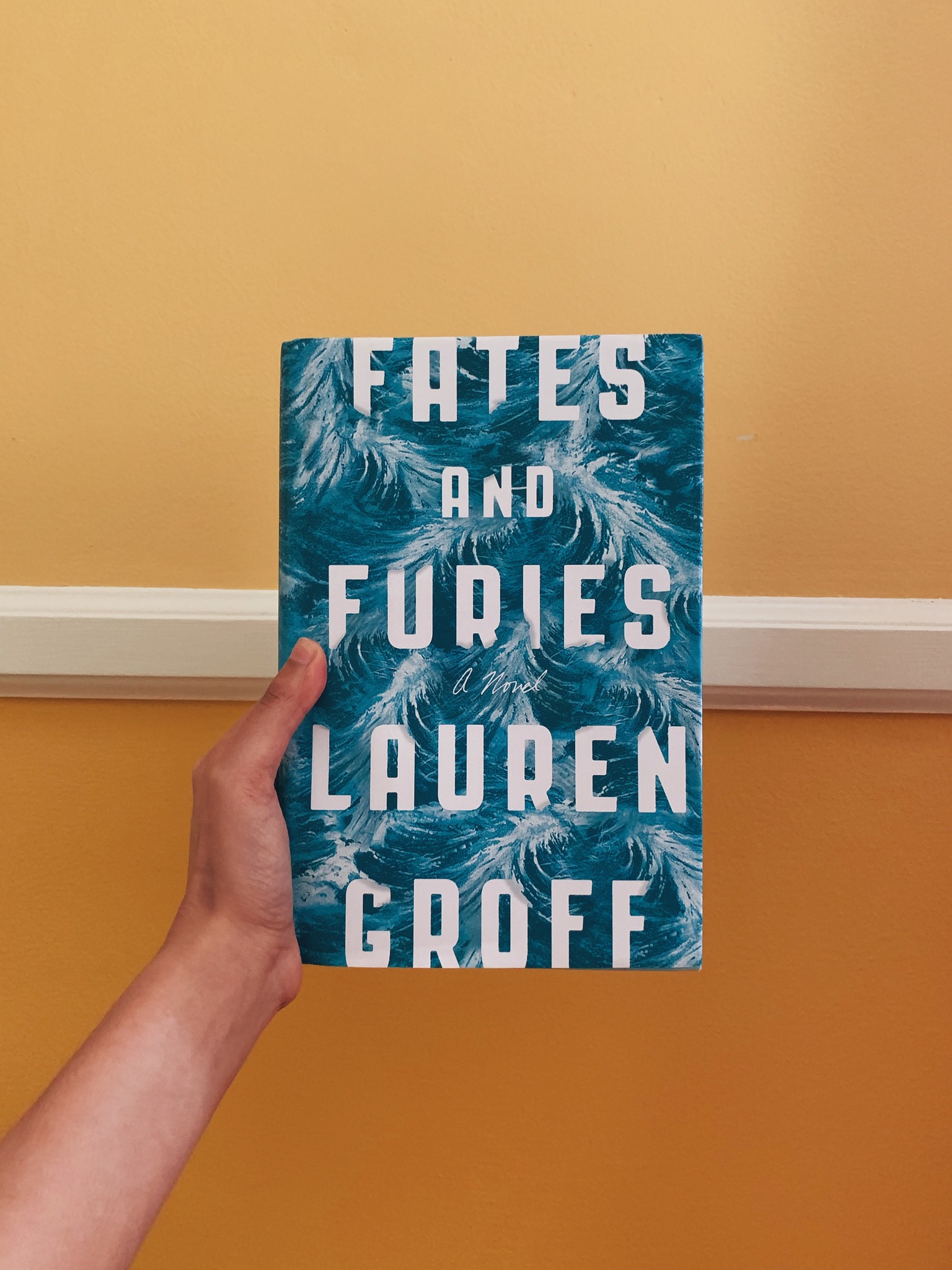
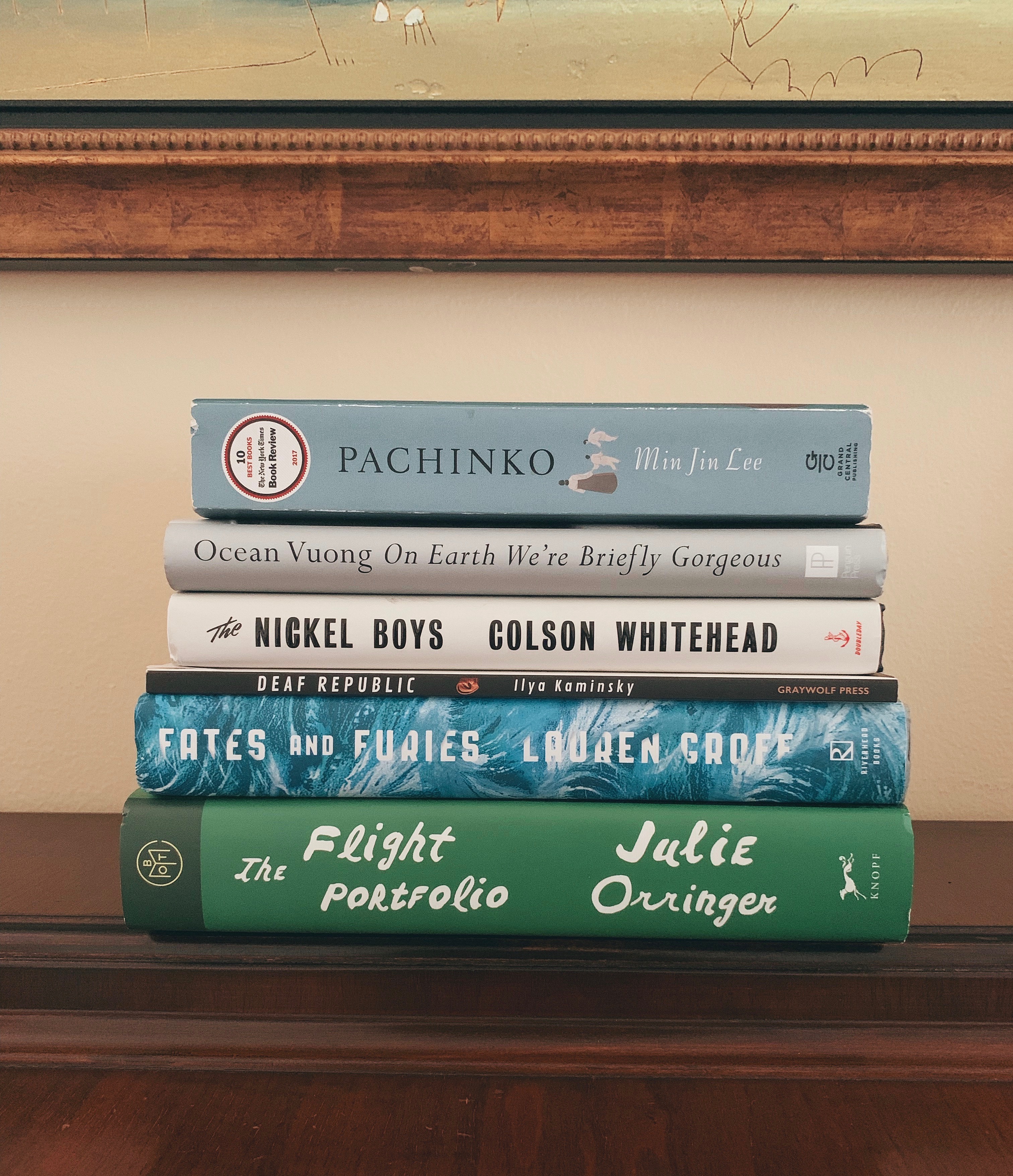
Fates and Furies by Lauren Groff
(This book is difficult to review without spoilers! I tried my best to avoid them, but I didn’t do very well).
Fates and Furies tells the story of a marriage in two parts— first told by the husband, then by the wife. While the marriage externally seems perfect, with the husband as an artist and his wife as a muse, the inner workings are slowly revealed through “twists” throughout. I have an unpopular opinion on this one. While I’ve heard a lot of praise for this book, specifically the second half, I found myself enjoying the first half and greatly disliking the ending.
The first half of the novel describes the rise of the husband, Lotto, as an artist. It read as a self aware critique of the culture and expectations of the male “literary genius” and pretentious culture of “elite” artists, vaguely reminiscent of Donna Tartt’s A Secret History. As it turned to the perspective of the wife, Mathilde, I was intrigued to hear the voice of a woman who had been reduced to a muse (and consequently an object) by her husband.
I was disappointed by the second half. While we did receive Mathilde’s perspective on this objectification by her husband, we also got far too much backstory. I dislike when all of a character’s traits are reliant entirely on what happened to them in their past rather than developed as the character grows and increases in autonomy. It seemed that everything about Mathilde is explained neatly by her past, and while Lotto had been able to grow over the decades described in the novel, Mathilde had remained the same twenty-year old woman, even in her 50s. Finally, there were additional twists right at the end that were simply unnecessary and ridiculous.
While Fates and Furies is an interesting exploration of male entitlement in art and how marriage can be unequally perceived, the story is undermined by unneeded plot points.
Pachinko by Min Jin Lee
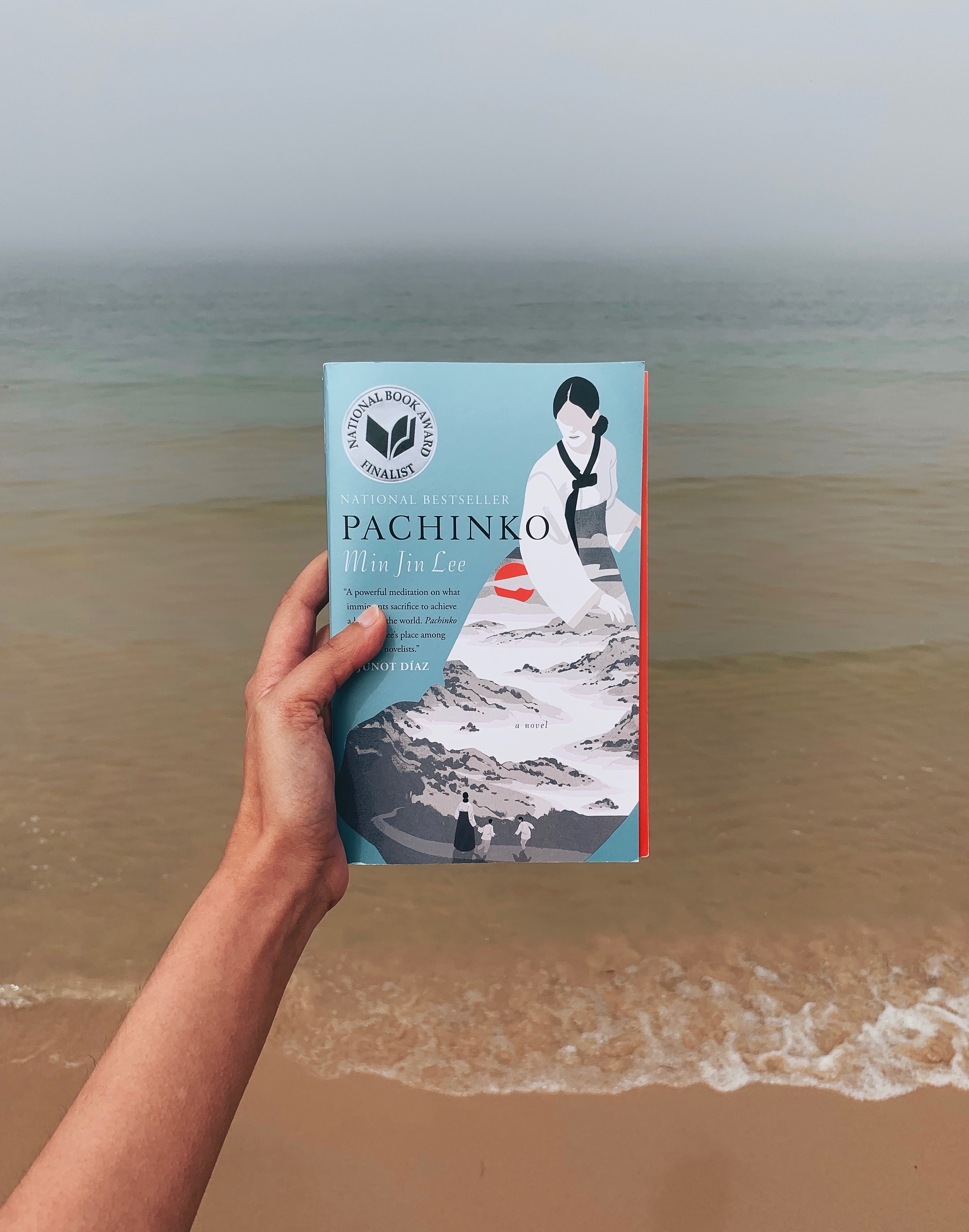
Like The Overstory, I picked up Pachinko knowing it was going to become a new favorite. This book has so many elements I’m interested in— it’s a multigenerational family saga, describes the traumas of colonialism and occupation, and thematically explores motherhood.
Pachinko follows a family for decades including the Japanese occupation of Korea and through World War II. The story of the family is dictated by cultural shifts and historical events, but also by the personal traumas each character carries. The structure of the narrative through time was interesting but sometimes unsatisfying— important events would occur, but rather than see the immediate ramifications, there would be a time jump some years to the future. On one hand, this was suited to themes of adaptation and resolution after trauma, but there were some moments that I felt were left hanging (a certain death at the end, specifically) where I wish there had been more immediate reactions simply due to the magnitude of the event.
Pachinko is so impressive in its swift coherence despite the expanse of themes, characters, and history woven into the narrative. This deeply moving story is certainly one of my favorites from this summer, and I recommend it to anyone interested in the history of Japan and Korea and the exploration of inherited familial and cultural traumas.
The Flight Portfolio by Julie Orringer
The Flight Portfolio is a fictionalized narrative of Varian Fry’s work to aid refugee artists during World War II. The Flight Portfolio initially intrigued me because I do tend to like long historical fiction books (though I’m wary of WWII fiction because it can feel exploitative and overdone) and the story of Varian Fry is compelling and heroic. However, as I read the book, I found that it centered much more on a romantic relationship Varian had rather than the work he was doing.
Orringer creates a fictionalized lover for Varian, named Grant, though Varian was married back home in America. I do think the complexity of being in a relationship with a man in WWII Europe while having a wife overseas is fascinating, and Orringer bases this relationship on some historical accounts of Fry having male lovers while doing his work aiding artists. However, I find it surprising that the Fry’s rescue work often feels like backstory to this fictionalized love story, and I wonder what Orringer’s intention of doing so was.
This novel was entertaining for the most part— I was engaged throughout— but the writing was often flat and I wished the romance was more of a subplot. The logistics of running a rescue operation, from forging documents to the moral complexities of choosing who to rescue first, were so much more fascinating to me. Overall, I felt myself wishing that this story was told from a different angle, and have no strong feelings about this novel.

On Earth We’re Briefly Gorgeous by Ocean Vuong
On Earth We’re Briefly Gorgeous is a moving letter from a son, Little Dog, to his Vietnamese mother who can’t read. It explores a Vietnamese immigrant family, Little Dog’s coming of age and sexual identity, and the mother-son bond as it shifts with age.
I am a big fan of Ocean Vuong’s poetry, so I was greatly anticipating his debut novel. It exceeded my expectations— its stunning prose is clearly from the mind of a poet and the short novel is filled with moments of quiet insight. The final section of this book had the most impact on me, specifically when verse was used. There were a few times where the writing was poetic in ways that didn’t quite land with me, and the letter is more a mediation than a plot (though it certainly moves with direction), but those critiques were not particularly distracting from my overall reading experience. This book is a new favorite of mine, and I have been recommending it to everyone, especially those interested in fiction about the traumas of war, of family, and of immigration.
The Nickel Boys by Colson Whitehead
The Nickel Boys by Colson Whitehead is the only book I’ve ever bought on its release day. After reading Whitehead’s The Underground Railroad, I was eager to read more of his work, and the synopsis of The Nickel Boys immediately caught my attention. The Nickel Boys is a fictional story based on the real horrors of the Dozier School in Florida. Following the character of Elwood Curtis as he is wrongfully put into the school, the novel describes attempts to find justice in a tragic, abusive situation when no one is listening.
Whitehead’s writing is sharp as always. In a short novel, The Nickel Boys is emotional and devastating without being exploitative in its descriptions of trauma (i.e. “trauma porn”). The ending was especially well done, as it genuinely embodied the gravity of the content and showed the long term effects of abuse and trauma. Another exceptional moment was the boxing match, which called to Ralph Ellison’s Invisible Man. I would recommend this book to a wide audience, as the writing is quite accessible and this is an important, but I also acknowledge that there is a lot of potentially triggering content in this novel.
Tropic of Orange by Karen Tei Yashimata
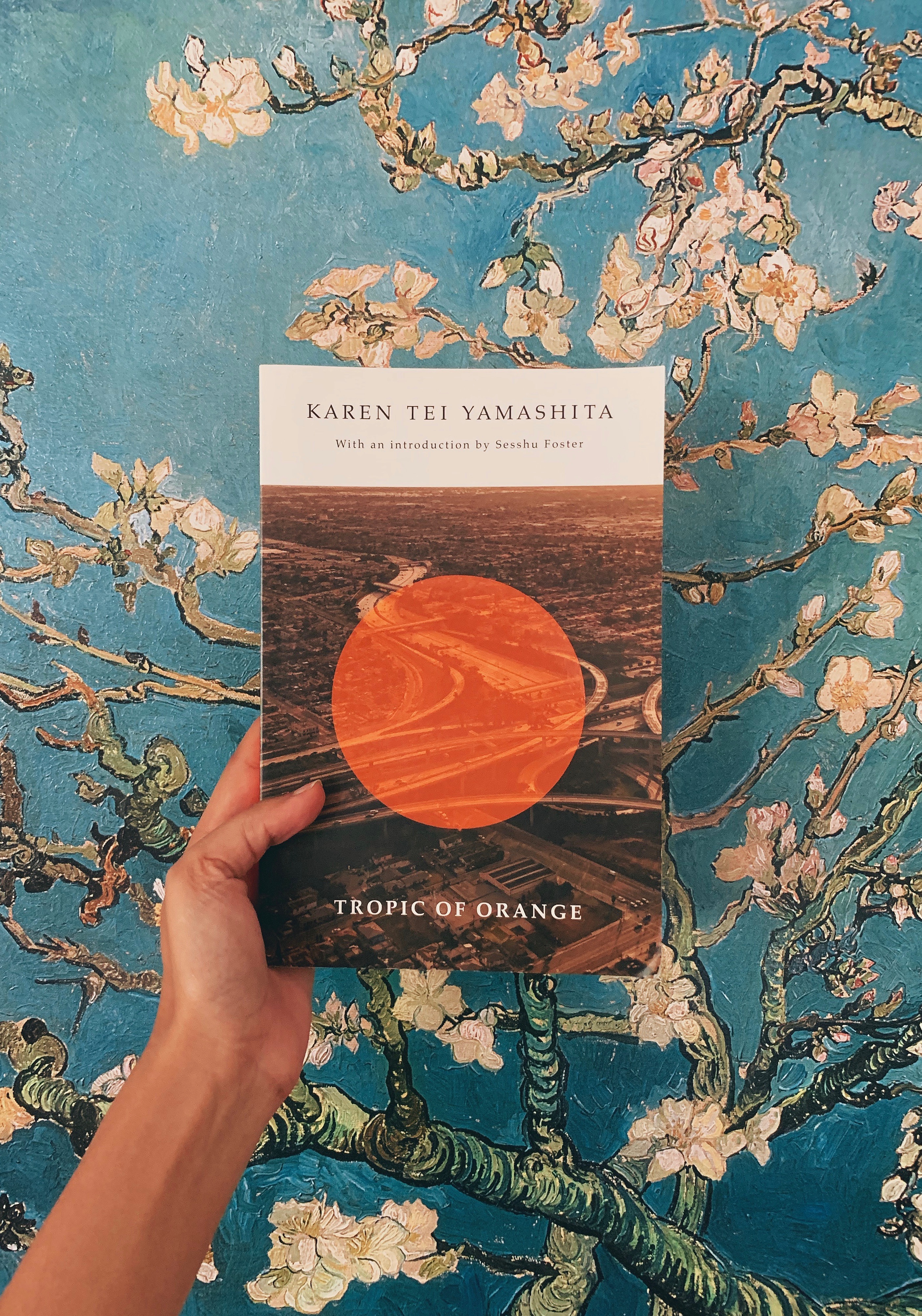
Tropic of Orange follows seven storylines through a week in magical, almost apocalyptic version of Los Angeles. Honestly, this book has a lot of elements I like, but I somehow couldn’t get into it. I was intrigued by different parts of each storyline, but found it quite slow (despite being a short novel with frequent, short chapters). I did like the writing for the most part, and I am interested in picking up more of Yashimata’s work.
I think this book just wasn’t for me, but if you’re interested in the many cultures of LA, it might be for you.
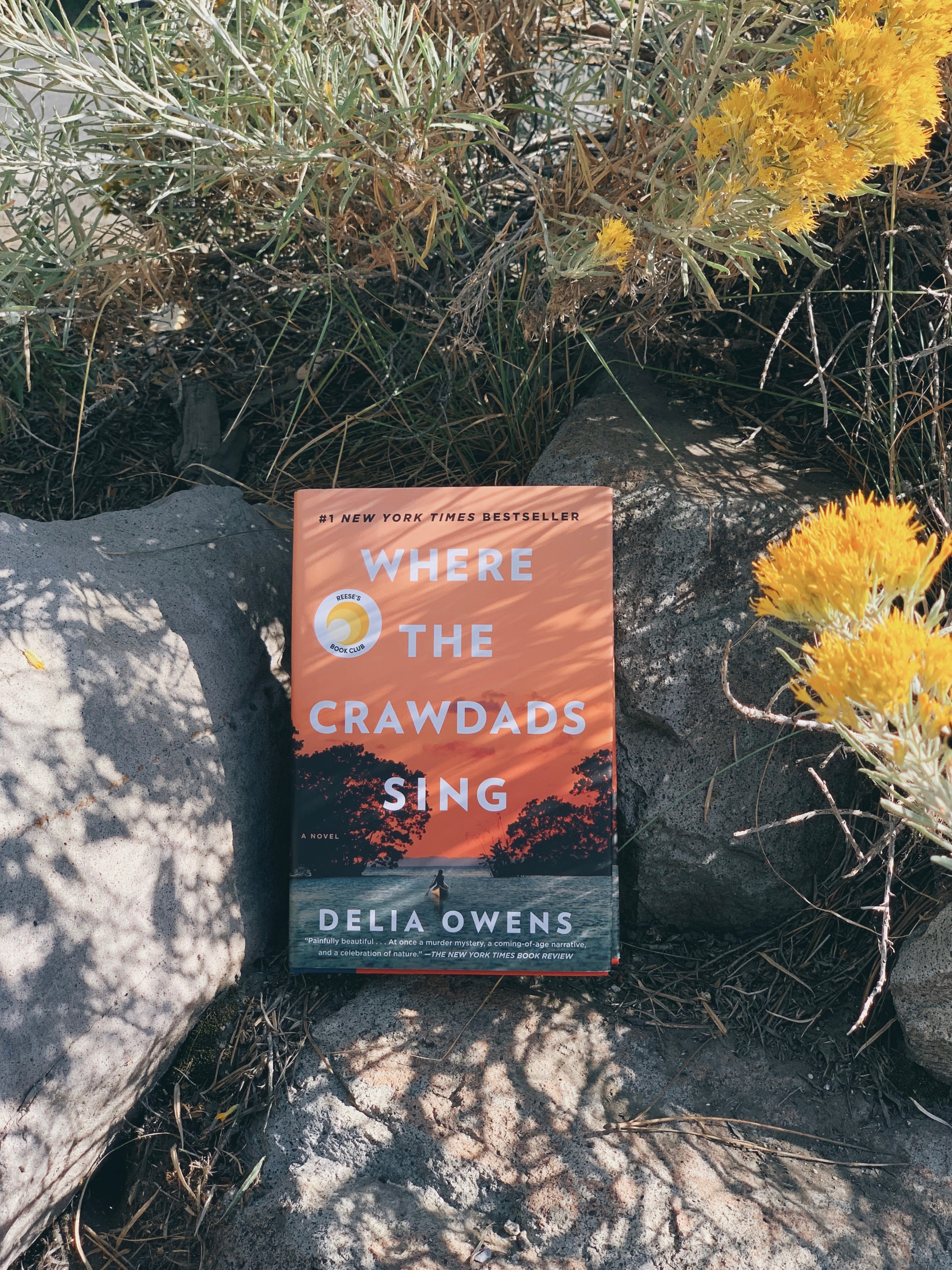
Where the Crawdads Sing by Delia Owens
Where The Crawdads Sing is a mixture of a mystery and eco-fiction that emphasizes how we are shaped by our environment. It describes a young girl, Kya, as she grows up in a swamp, mostly ostracized by society, but also describes a possible murder. I’ve heard a lot of praise for this book, and after reading the Overstory I’ve been looking to dive into more eco-fiction. I did like this one, but while the beginning had me deeply engaged, I found the end disappointing.
At first, this book had me hooked with an intriguing plot and the atmospheric writing. The ecology and biology of the swamp came alive through strong prose. The story of Kya as a little girl was fascinating and at times greatly charming. While I didn’t mind the romances that drove the plot, I was far more interested in Kya’s relationship with the town (which men were a vehicle for) and her relationship to her past.
The ending lost the magic because it became all about the plot points at the expense of the atmosphere and character development which drove the beginning of the novel. The ending felt rushed and overly neat. I didn’t dislike this book overall— in fact the first 250 pages were great— I just wasn’t interested in the murder mystery front story. I would recommend this book for those interested in getting into eco-fiction, in atmospheric fiction, or subtle mystery novels.
Favorite Poems and Short Stories
- Deaf Republic by Ilya Kaminsky
These poems describe a family during the occupation of a city. This collection is beautifully crafted, incorporating sign language to tell a story that provides insight into how we communicate and respond to conflicts in the present.
- Boy With Thorn by Ricky Laurentiis
This collection of poems is moving– poems range from deeply personal to historical, and language is used brilliantly throughout. My favorite poems in this collection are Conditions for a Southern Gothic and I Saw I Dreamt Two Men.
- Poems by Layli Long Soldier
While I haven’t yet read the entirety of WHEREAS, I have studied some of Long Soldier’s powerful work this summer. The poem 38 is incredible, and I recommend it to everyone, even if you don’t typically read poetry.
- The Cossacks by Leo Tolstoy
This Tolstoy short story (or perhaps novella) was recommended to me by a friend and added at least one piece of Russian Lit to my summer reading. Beautiful and cutting, I recommend this short read for Tolstoy fans!
Overall, I am quite pleased with my summer reading experience. I found new favorites (The Overstory, Pachinko, On Earth We’re Briefly Gorgeous, The Nickel Boys, and The Changeling) and new literary interests. I’m now ready to get back into my final year of college and move to more course-based and academic reading 🙂
Thanks for reading!
 zoreads